Advocacia DigitalA clear presentation, from first visit to contact.
A business website concept that organises services, people and content in a restrained visual identity. Navigation helps visitors explore each area and find the next step.
Developed by Digital S&D as a demonstration. The firm, people and content are fictional. It does not offer legal services, and the form only simulates completion without sending requests.
I want a business website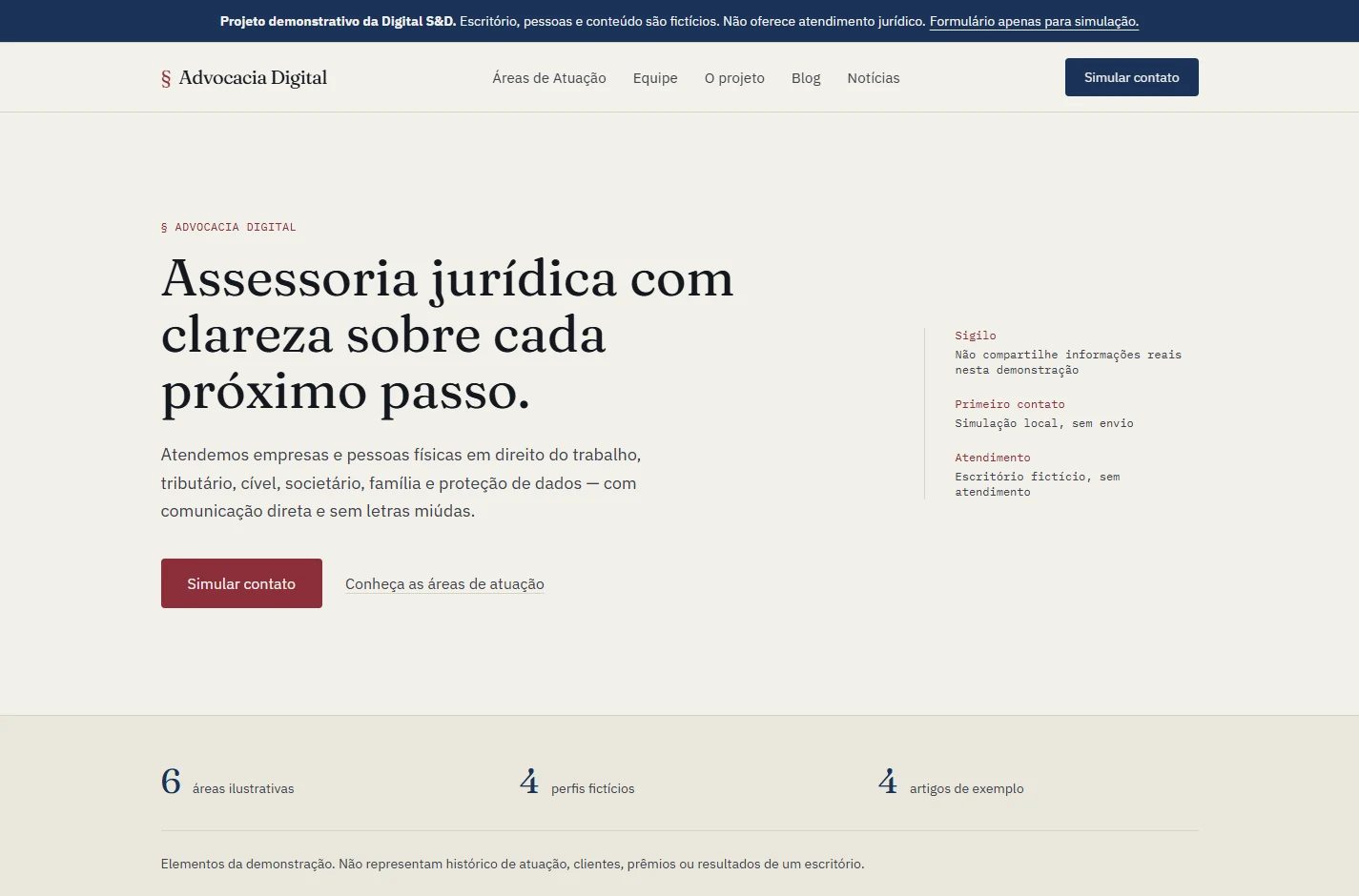
From the proposed problem to delivery.
Proposed audience: visitors to a professional-services website who need to understand practice areas, people and related information.
Proposed problem
How can a website with several practice areas and content sections remain clear? This concept explores navigation, editorial hierarchy and a route to contact, without representing an operating law firm.
Contribution and responsibility
A Digital S&D team project, founded by Álvaro Marinho and Arthur Leite. Álvaro is a founder; we do not attribute the entire implementation to one person. This presentation brings together the team’s work and the checks performed on this version.
Implementation decisions
- Astro generates 26 static pages, with centralised content and types for maintenance.
- Local fonts and an editorial identity organise longer texts and related pages.
- The menu and FAQ work with a keyboard; the form moves focus to the invalid field.
- The simulation clears the data and opens a confirmation with no field values in the URL; fields are disabled without JavaScript.
Astro · TypeScript · Tailwind CSS
Delivery and evidence
Institutional pages, six illustrative practice areas, fictional profiles, blog, news, FAQ and simulated contact, adapted for desktop and mobile.
Astro checked 33 files with no errors or warnings; the build exported 26 pages and six tests passed. Links, assets, validation, notices and the running contact flow were checked, with no POST or field values in the URL. Current screenshots show the built artefact.
Limits of this version
This is not a legal service, client deployment or evidence of professional credentials. No API, CRM, analytics, CMS or enquiry delivery. Demo pages use noindex; the portfolio case is separate. Real deployment requires defined content, credentials, review and confirmed enquiry delivery.
Information organised for first-time visitors.
Service pages connect to profiles and related content. On mobile, the menu brings together the main routes and content blocks reorganise into one column.
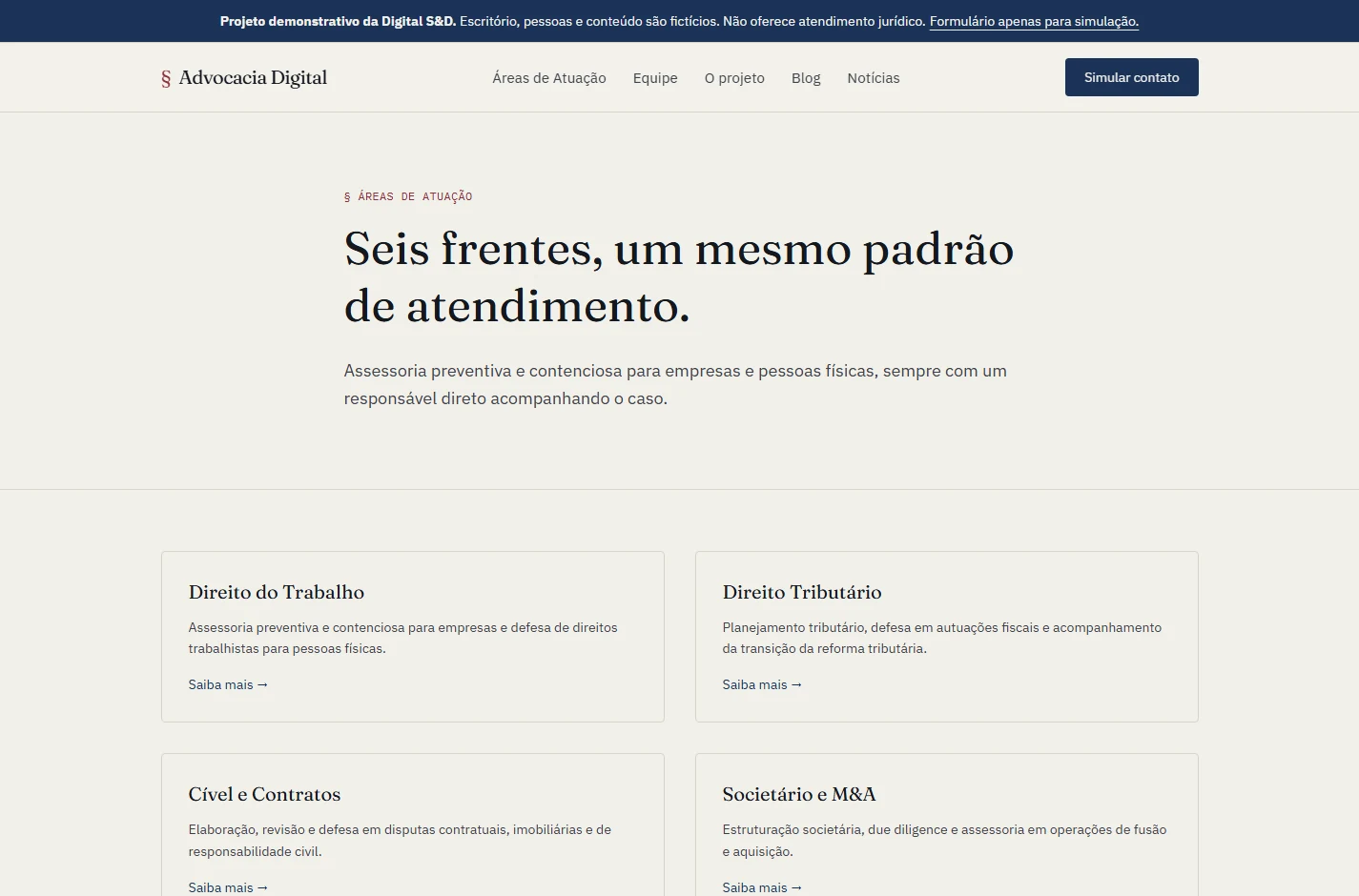
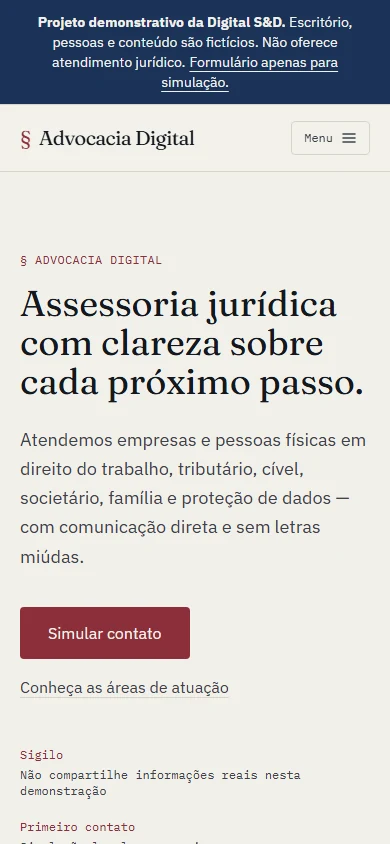
A restrained design with space to read.
Paper tones, deep blue and burgundy accompany editorial-style headings. Text hierarchy and spacing make a multi-page presentation easier to follow.
A complete business website to explore.
- Pages presenting the business, services and fictional profiles
- Blog and news with sample local content
- Frequently asked questions that work with a keyboard
- A mobile menu that closes with Escape
- A demonstration form with validation and focus on the field with an error
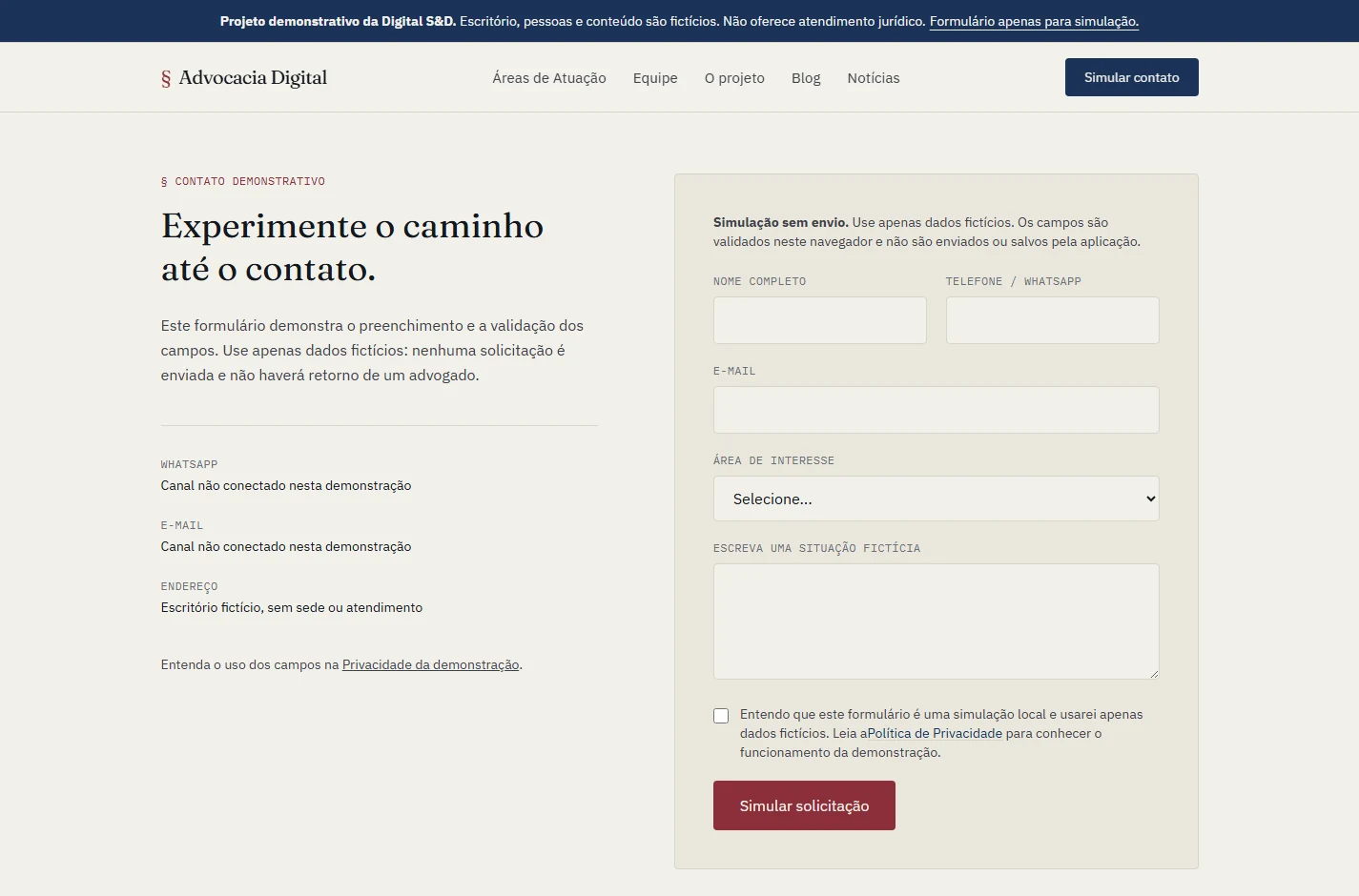
The next step needs to be understandable.
Labels guide completion and validation identifies the first field needing attention. Confirmation explains that the simulation is finished, without promising a service that does not exist.
A real deployment requires verified content and credentials, legal review, authorised channels and a tested sending integration. The demonstration uses local content and has no connected CMS.
View the project code on GitHubHow will you present your business’s services?
We plan the website’s structure, content and identity around your work. We can discuss what your customers need to find and which channels will be included.